Todd Hollon




Patient forecasting
Machine learning has the potential to revolutionize the way we predict patient outcomes. Electronic medical records (EMR) have streamlined data collection and made it easier than ever to use ML algorithms to assist in patient care. Our work has focused on predicting (1) how well patients will recover after surgery and (2) what will ultimately affect their long-term outcome and survival. We use ML algorithms that allow for transparency and interpretability, both of which are essential to trust the recommendations of ML decision-support tools in healthcare. By identifying the specific set of symptoms, radiographic findings, laboratory values, etc. that our models use for prediction, physicians can use ML recommendations in the appropriate clinical context for personalized treatment decisions.
Related publications
-
 JOURNAL OF NEUROSURGERY · 2018
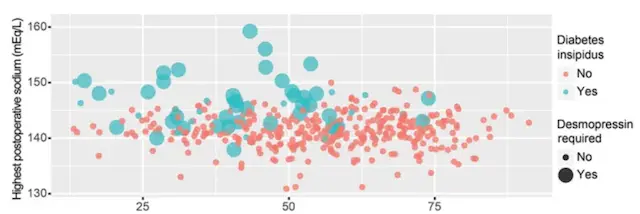
This study develops a machine learning model to forecast early postoperative outcomes after pituitary adenoma surgery, supporting risk stratification and perioperative planning.
-
CRITICAL CARE MEDICINE · 2018
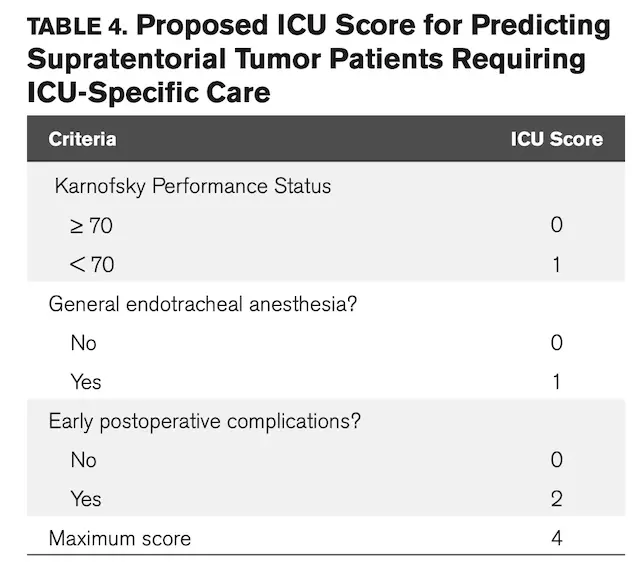
This work identifies predictors of ICU-level needs after supratentorial brain tumor resection and validates a risk score to guide postoperative triage and resource allocation.
-
JOURNAL OF NEUROLOGICAL SURGERY · 2018
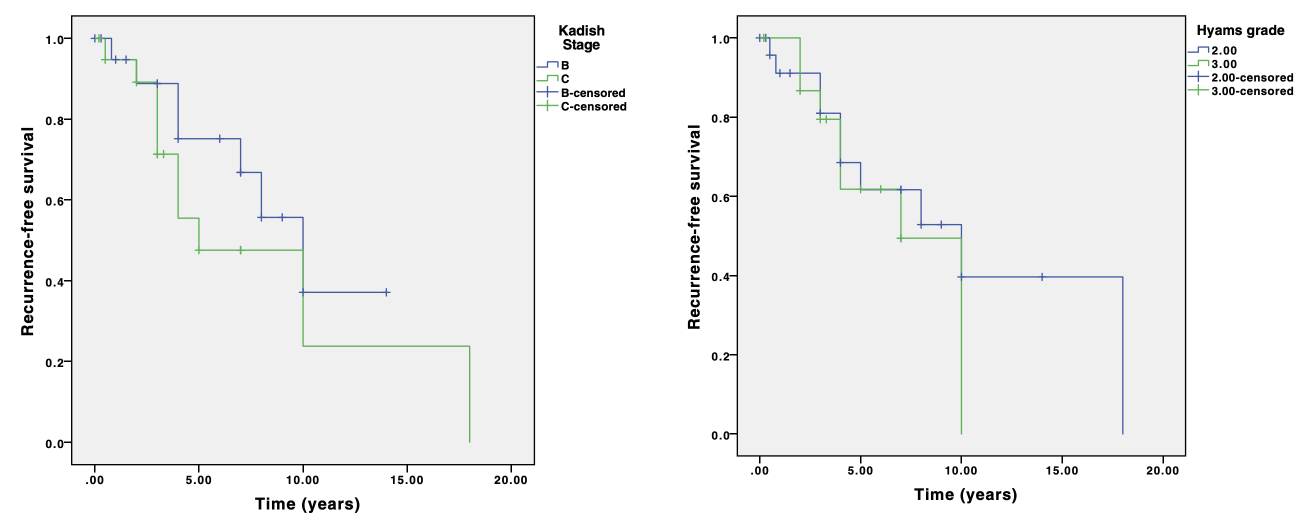
This outcomes study reports complication profiles and survival metrics after surgical treatment of olfactory neuroblastoma.
-
 OPERATIVE NEUROSURGERY · 2017
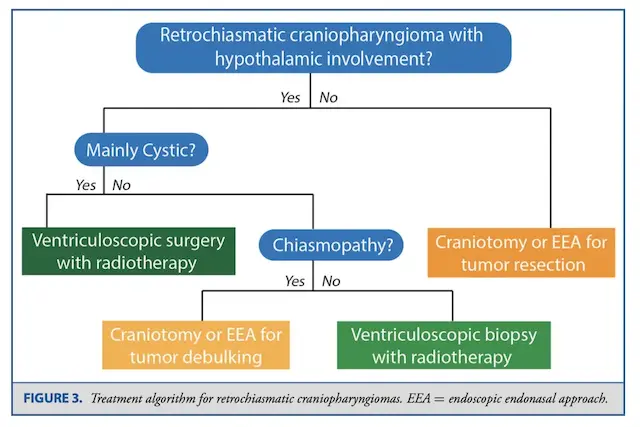
This paper outlines indications and technique for ventriculoscopic treatment of cystic retrochiasmatic craniopharyngiomas and reports short-term clinical outcomes in treated patients.
-
JOURNAL OF NEUROSURGERY · 2016
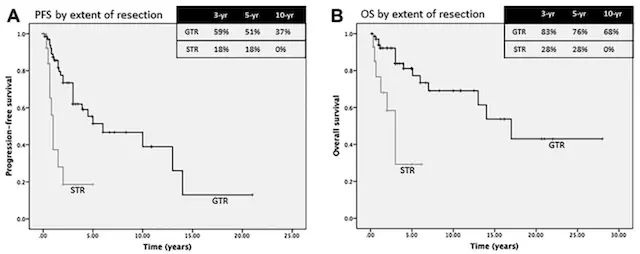
This cohort study of 109 adults with supratentorial hemispheric ependymoma characterizes survival outcomes and prognostic factors to inform treatment planning and follow-up.
-
 NEUROSURGERY · 2016
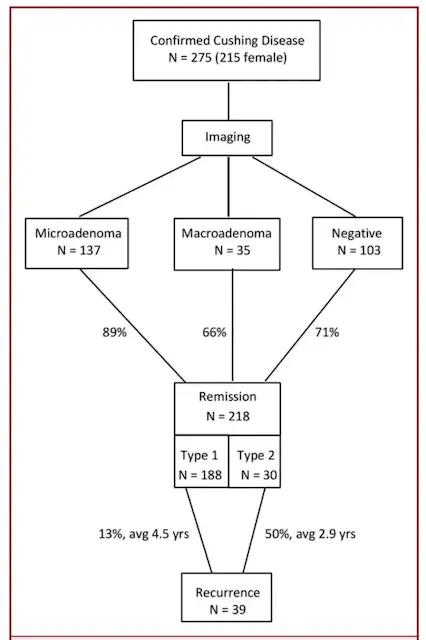
This long-term single-center analysis reports outcomes of transsphenoidal surgery for Cushing disease, identifying patterns in remission and recurrence over three decades of care.